Why I Use My Real Name
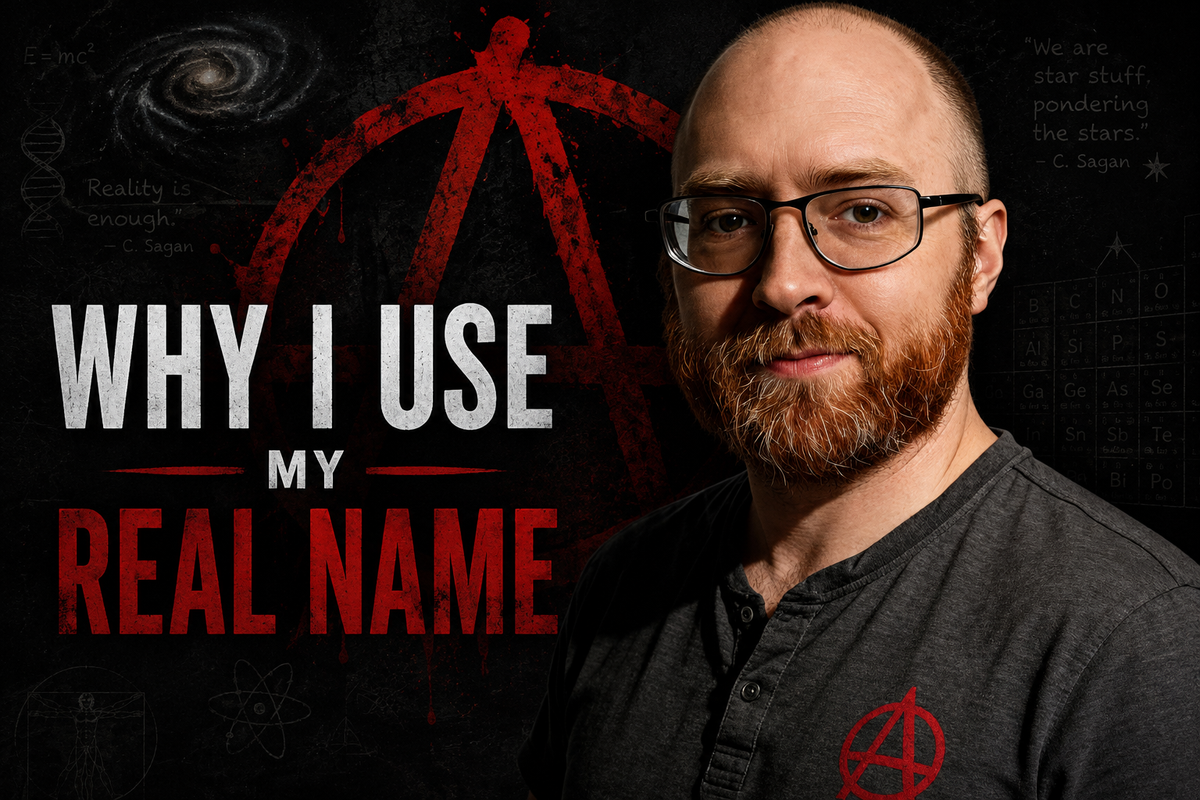
There’s a version of this blog that would have been easier to write. It’s the version where I pick a pseudonym, keep my face off the page, and let “Good but Godless” exist as a kind of anonymous outpost — safe, deniable, separate from the rest of my life. A lot of people in my position do exactly that, and I don’t blame a single one of them for it. But I decided against it, and I want to explain why.
The first time I came out, I hid for years afterward
I first realized I didn’t believe in God when I was sixteen. I told my parents. The reaction was bad enough that I learned the lesson fast: don’t do that again. So I didn’t. I spent the rest of high school and much of my life performing a faith I didn’t have, because performing it was so much easier than living openly without it.
That’s the quiet tragedy of stigma — it doesn’t just cost you the argument, it costs you years. I know people who are still paying that cost right now, today, in your city, in your family. They’re sitting at Thanksgiving tables nodding along to grace, bowing their head in complicity without hearing ga word. They’re keeping “None” off their social media bio in the “Religion” section. They’re doing the same math I did at sixteen: is it worth it to be honest? Will it affect my career, my family, my social standing?
Anonymity treats honesty like a liability
When I finally came back around to atheism as an adult — after years of drifting through other belief systems trying to find something that fit — I came out again. This time on Facebook because, ironically, that was easier than having a real conversation. It gave me more time for measured thought and chosen words. This time my family didn’t erupt. They just… didn’t discuss it. Silence instead of horror. In some ways that was harder to sit with, because there was nothing to push back against, just a door quietly closing and the knowledge of a new way to disappoint people.
If I write this blog under a fake name, I’m telling that sixteen-year-old, and every person reading this who’s in the same spot, that the smart move is still to hide. That non-religion is the kind of thing you whisper about from behind a curtain, something to manage rather than something to simply be. I don’t think that’s true, and I’m not willing to write a blog that implicitly argues otherwise.
Visibility is how stigma actually breaks
Every minority identity that’s shed serious stigma over the last century, did it partly through ordinary people being visibly, unremarkably themselves…in public. Not activists chained to fences and living in trees — just people willing to say “this is who I am” using their actual names, so that the people around them had to reckon with the fact that someone they already knew and respected held this identity.
Atheism and agnosticism are overdue for their own version of that. The data on how atheists and the non-religious are perceived — as less trustworthy, less moral, less “one of us” — doesn’t move because of clever arguments. It moves because people update their mental picture of “atheist” to include their neighbor, their coworker, their kid’s soccer coach. That only works if the neighbor is willing to be counted, identified, and public.
This isn’t a claim that hiding is wrong
I want to be careful here, because I know this isn’t a universal option. Plenty of people can’t safely come out — not to family, not to employers, not in the town they live in. Depending on where you are, “I don’t believe in God” can cost you your job, your custody arrangement, your relationship with your kids…even your physical safety. Religion can claim remarkable tolerance…until you are no longer part of its “in” crowd. If you’re weighing that calculation and choosing silence, that’s not cowardice. That’s just correctly reading the room you’re actually in.
What I’m saying is narrower: for those of us who can be visible without immediate catastrophic cost — and there are more of us than truly think we can — visibility is a kind of quiet public service. Every real name attached to “I’m godless and I’m fine” chips away, just slightly, at the assumption that made hiding necessary in the first place. It’s not brave and it’s not courageous. It’s more like paying it forward to the version of me that spent years pretending, to the sixteen-year old version of me who still bears the wound of not being able to “be real”.
So: my name
I use my real name on this blog because I spent too many years already using someone else’s. For a long time, I had a string of alias and anonymous Twitter, Instagram, and Facebook accounts. Because my kids are watching how I handle disagreement about the biggest question there is, and I’d rather they see honesty than performance, when they get old enough to see Dad’s old social media accounts. And because somewhere out there is a sixteen-year-old doing the same math I once did, I’d like the answer to look a little less lonely than it did for me. In my day, it was Wikipedia and Dawkins where I found my first forays into philosophical argument. Now, I want another resource, to give back to those who are just starting to wonder if what they’ve been taught is all there is.
Good but Godless isn’t an anonymous project. It’s just me, using my actual name, saying the actual thing, because it’s too important not to.